

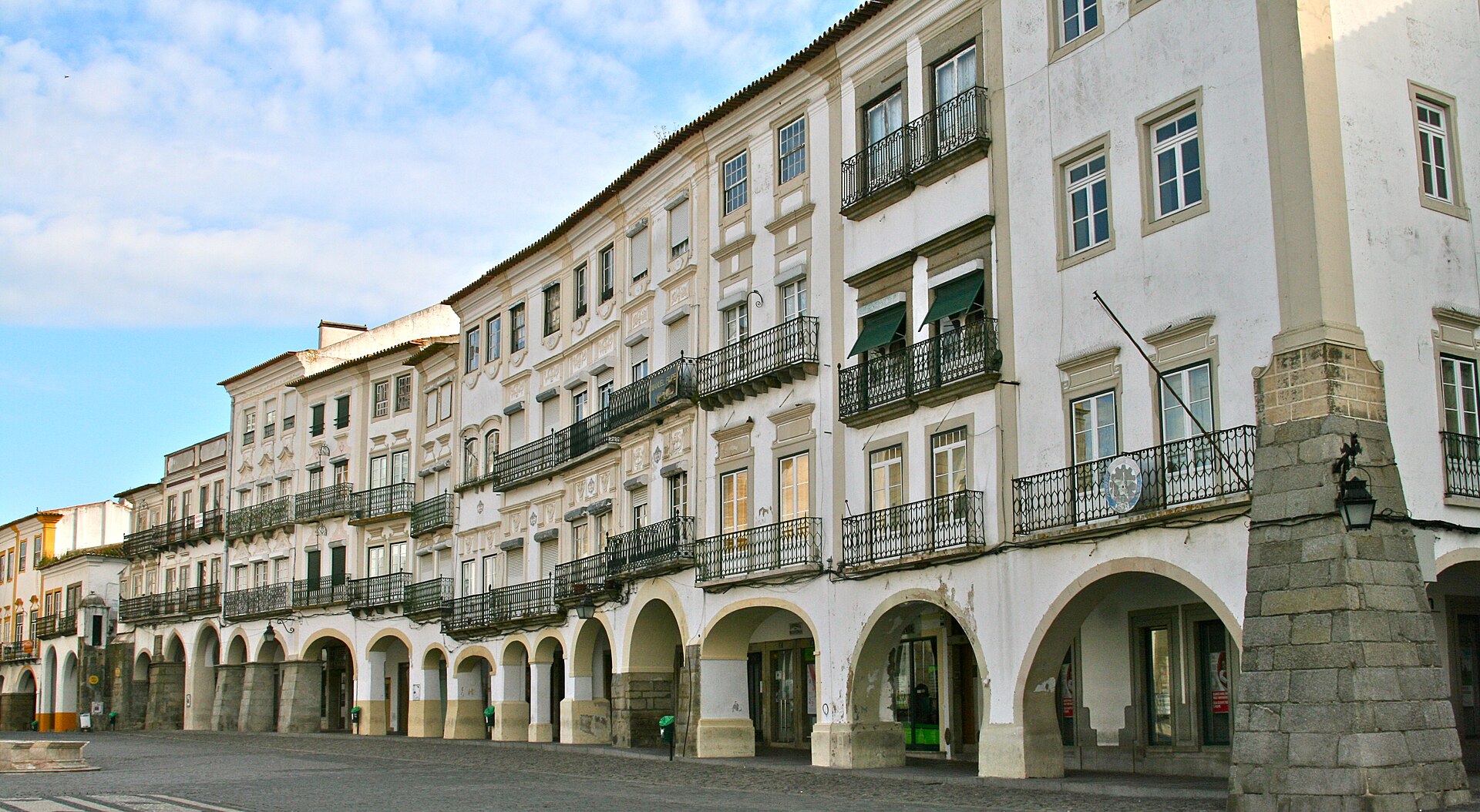
Évora is a spectacular, sun-bleached museum city located in the heart of Portugal’s vast, golden Alentejo region. Often celebrated as one of the country’s most historically rich destinations, Évora is a UNESCO World Heritage site enclosed by ancient medieval walls. It is a place where layers of history are beautifully visible on every corner, from the monumental columns of the Roman Temple of Évora to the hauntingly beautiful Chapel of Bones (Capela dos Ossos) and the grand Gothic Cathedral.
Travelers come to Évora to slow down, wander through narrow cobblestone streets lined with whitewashed houses, and experience the relaxed, rural charm of the Alentejo.
However, Évora is not just a quiet historical relic. It is also home to the University of Évora, the second oldest university in Portugal. This prestigious institution infuses the ancient city with a large, energetic student population. On any warm evening, the historic Praça do Giraldo and the surrounding quiet alleys hum with the sound of students, locals, and travelers sharing regional Alentejo wines and enjoying traditional outdoor cafes. Because of this unique blend of heritage, student life, and slow travel enthusiasts, questions regarding the local availability, etiquette, and legal status of cannabis are incredibly common.
While Portugal is celebrated globally for its progressive stance on drug policy reform, navigating these rules in a highly traditional, close-knit inland capital like Évora is vastly different from doing so in large metropolitan centers like Lisbon. This guide provides you with essential legal facts, local cultural insights, and practical safety guidelines so you can explore this historic Alentejo gem with total peace of mind.
The Legal Reality: Is Weed Legal in Evora?
To travel through Évora safely, you must first clear up a highly common and potentially dangerous misunderstanding: recreational cannabis is not legal in Portugal.
In 2001, Portugal enacted its historic Law 30/2000, which decriminalized the acquisition, possession, and consumption of all illicit substances for personal use. However, decriminalization is not the same as legalization. Under Portuguese national law, the possession and consumption of cannabis remain administrative offenses, categorized under the legal term contraordenação.
This means that while you will not face criminal prosecution, a court trial, or a prison sentence for holding a small, personal amount of cannabis, you are still violating administrative rules.
If you are stopped by local law enforcement officers in Évora, such as the Guarda Nacional Republicana (GNR) or the Polícia de Segurança Pública (PSP), and found with cannabis, they are legally required to confiscate the substance. The officers will then refer your case to a local administrative panel known as the Comissão para a Dissuasão da Toxicodependência (CDT), which translates to the Commission for the Dissuasion of Drug Addiction.
The CDT is a multidisciplinary committee comprised of legal experts, medical professionals, and social workers. For Portuguese residents, the panel focuses primarily on health, counseling, and treatment options. For international tourists, however, the CDT holds the legal authority to issue punitive administrative penalties. These penalties can include significant cash fines, temporary bans from entering specific public spaces (such as the historic plazas or public gardens), or even exclusion orders from the country. While first-time minor infractions are sometimes suspended without a fine, navigating a foreign administrative hearing is incredibly stressful, time-consuming, and can easily ruin your vacation.
Understanding the Legal Thresholds: Personal vs. Criminal
To remain protected by Portugal’s decriminalization framework, you must stay strictly within the legal limits defined for personal consumption. Under Portuguese law, these limits are calculated as a ten-day supply for an individual.
For cannabis, the maximum personal limits are:
- 25 grams of dried flower (marijuana)
- 5 grams of hashish (cannabis resin)
- 2 grams of cannabis oil
If you are carrying any amount that exceeds these thresholds, the decriminalization protective shield disappears entirely. You will be immediately arrested by the GNR or PSP, processed through the criminal court system, and charged with criminal drug trafficking under the Portuguese Penal Code.
Drug trafficking is treated with extreme severity in Portugal. Minor trafficking offenses carry mandatory prison sentences ranging from one to five years, while major distribution charges can result in up to twelve years of imprisonment. Even carrying slightly more than the ten-day personal limit, or carrying your personal supply divided into multiple small plastic baggies, can be interpreted by a prosecutor as intent to sell, triggering a criminal trial.
The Absence of Dispensaries, Social Clubs, and Coffee Shops
Unlike certain states in the United States, provinces in Canada, or the private club model found in neighboring Spain, Portugal has not established a legal, commercial retail market for recreational cannabis.
When planning your trip to Évora, you must keep these three critical facts in mind:
- No Dutch-Style Coffee Shops: You will not find public cafes or shops in Évora where you can legally walk in, look over a menu, and purchase or smoke cannabis.
- No Spanish-Style Cannabis Social Clubs: Portugal does not permit the operation of private cannabis clubs. Any venue claiming to act as a private cannabis association is operating entirely outside the law, exposing its owners and customers to immediate police raids and criminal prosecution.
- Pharmacy Access is Reserved for Medical Patients: While medical cannabis was officially legalized in Portugal in 2018, the system is exceptionally strict. Pharmaceutical-grade medical cannabis is available only to Portuguese residents who hold a valid prescription from a registered local doctor for a specific, severe qualifying condition. These products are distributed exclusively through licensed state pharmacies. Foreign medical cards, digital prescriptions, or doctor letters from other countries are not recognized under any circumstances.
Sourcing Cannabis in Evora: Street Risks and Safety Realities
Because there is no legal commercial pathway for recreational users, the only way to obtain high-THC cannabis in Évora is through unregulated, illicit street channels. For tourists, attempting to buy street cannabis in this region is a highly risky activity that is strongly discouraged.
Évora is an exceptionally safe, peaceful, and welcoming city with an incredibly low rate of violent crime. However, the street-level drug market operates in the shadows and presents distinct dangers for visitors:
- Heavy Policing in Student and Historic Zones: The local GNR and PSP police forces are highly active throughout the city center, particularly around the historic pedestrian streets surrounding Praça do Giraldo, the quiet parks like the Public Garden (Jardim Público), and the main municipal transit stations. Undercover and plainclothes officers regularly patrol these areas to monitor illicit activities.
- Low-Quality Products and Contamination: The illegal cannabis available in inland Portugal is often of very low quality. In this region, low-grade hashish is far more common than high-quality flower. This street-sold resin is frequently cut with harmful chemical additives, binders, or impurities to increase its weight, posing serious health risks.
- Scams and Targeted Theft: Street dealers frequently target tourists, knowing that visitors have no legal recourse if they are sold fake products, short measures, or are simply robbed. Engaging in drug transactions in unfamiliar, isolated alleys late at night exposes you to the real threat of mugging and physical harm.
The safest and most sensible rule for your trip to Évora is simple: do not buy cannabis on the street.
CBD and Hemp Products in Evora
If you are looking for the therapeutic benefits of cannabis without the psychoactive effects of THC, you will find that CBD products have become increasingly accessible across Portugal. You may find specialized wellness boutiques, pharmacies, or health food stores in Évora selling high-quality CBD oils, cosmetic creams, and topicals.
However, you must exercise extreme caution regarding dried CBD flowers:
- The CBD Flower Gray Area: While CBD oils, capsules, and creams containing less than 0.2% THC are fully legal to buy and use, dried CBD buds and flowers exist in a highly challenging legal gray area. Under Portuguese regulations, dried hemp flowers are officially classified as industrial or ornamental agricultural products and are not legally intended for human consumption or smoking.
- The Risk of Police Confusion: Local police officers cannot distinguish dried CBD flowers from illegal, high-THC marijuana simply by looking at them or smelling them. If you are stopped by the GNR or PSP with CBD buds, the officers will treat the encounter as a standard public possession infraction, confiscate the product, and refer you to the CDT, leaving you to contest the administrative charges through a complex appeal process later.
Local Etiquette and Safety Tips for Travelers
To ensure you have a safe, respectful, and memorable trip to Évora, it is best to align your behavior with the local Portuguese way of life.
Keep these practical guidelines in mind:
- Respect Local Conservatism: Outside of the active university circles, Évora is a traditional, culturally conservative community with deep historical and religious roots. Public consumption of cannabis is met with intense social disapproval. Smoking near schools, family-oriented parks, or historic religious sites like the Temple of Diana or the Évora Cathedral will quickly result in residents calling the police.
- Keep It Discreet in Accommodations: If you are staying in a rented historic apartment, hotel, or guest house, be highly mindful of the odor. Portuguese historic buildings are closely packed, and neighbors or staff will not hesitate to report strong cannabis smells to building management or the GNR.
- Zero-Tolerance for Impaired Driving: If you rent a car to explore the beautiful landscape of the Alentejo region, visit the stunning megalithic monuments nearby like the Almendres Cromlech, or drive to traditional villages like Monsaraz, never drive under the influence. Portugal has a strict, zero-tolerance policy for drug-impaired driving. Roadside police checkpoints are common, especially on regional highways like the N114, N18, and roundabout exits during weekends. Officers utilize highly sensitive saliva tests that can detect THC in your system hours after consumption. A positive test results in the immediate loss of your driving privileges, heavy court fines, and potential criminal charges.
